How to Keep a Yin Yoga Practice Going on the Road Without a Studio or Props
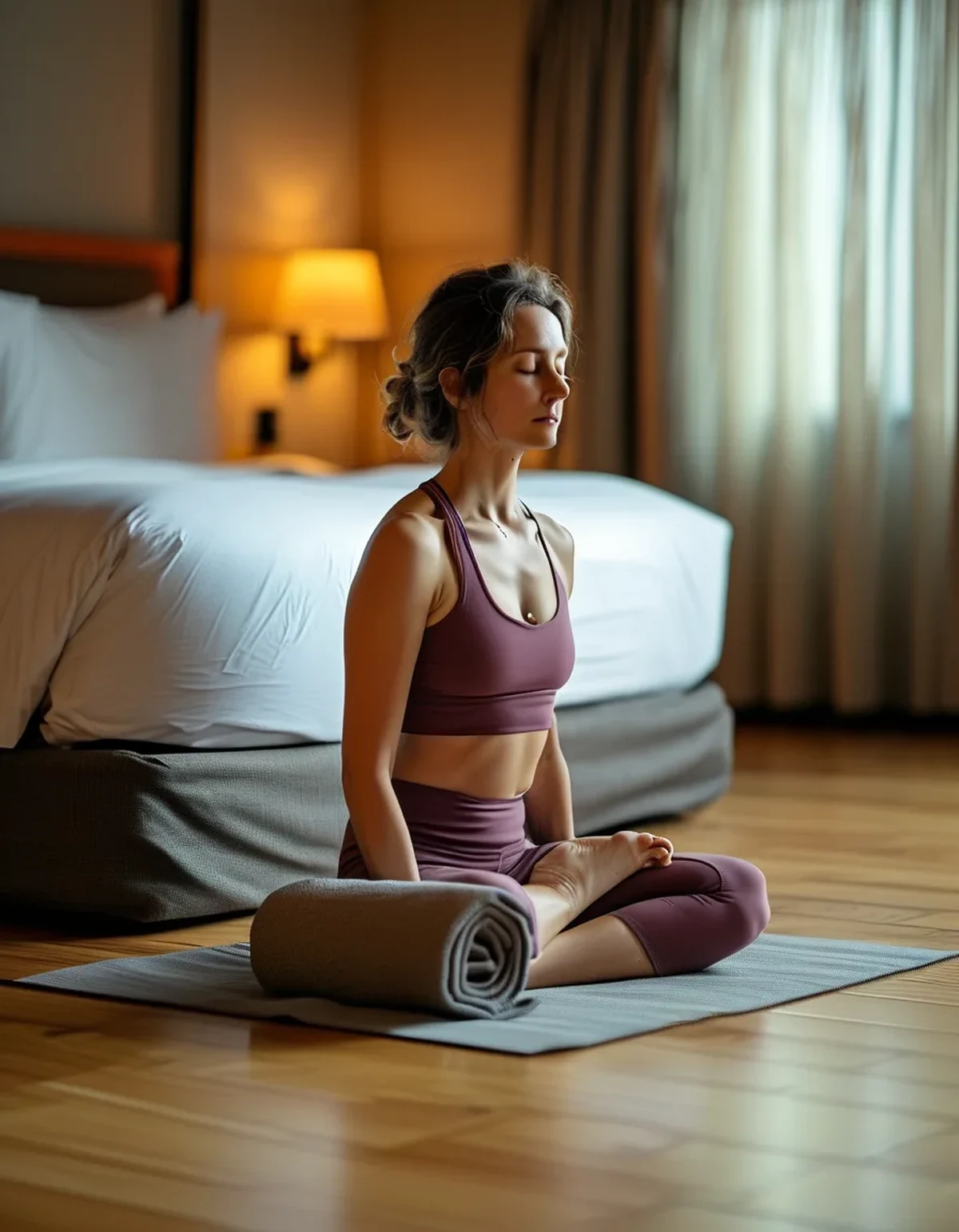
Quick Answer: A hotel room yin practice works well by substituting everyday items for studio props — a rolled towel or extra pillow for bolsters, a folded blanket for padding — and choosing a smaller set of poses that don’t require a wall or a large clear floor area.
Yin yoga’s whole approach is built around long holds supported by props in a quiet, dedicated space, which makes a hotel room or a shared Airbnb living room feel like an obvious excuse to skip the practice entirely for the length of a trip.
Why does travel feel like an automatic pause for a yin practice specifically?
Yin relies more heavily on props than most other yoga styles — bolsters, blocks, blankets — used to support the body during holds that often last 3-5 minutes each. Without that support, poses that are meant to be passive and restorative can become genuinely uncomfortable or even risky to hold that long, which is a real, valid concern rather than just an excuse.
What actually substitutes for studio props while traveling?
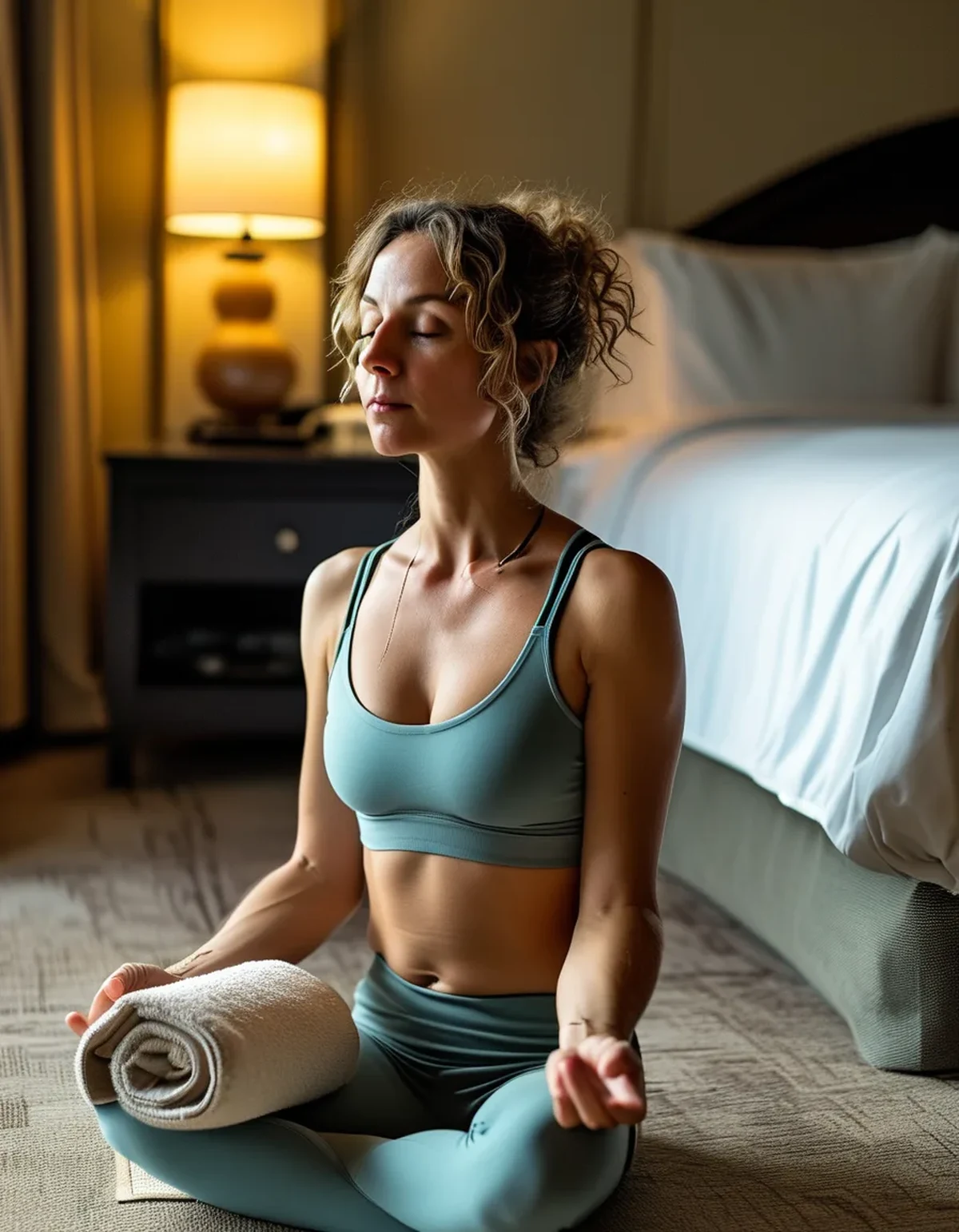
A rolled-up hotel towel or two stacked pillows work as a reasonable bolster substitute for supported poses like reclined butterfly or supported twist. A folded blanket or spare towel under the knees or hips protects joints on hard hotel flooring the way a padded studio floor normally would.
Which poses actually work well without a wall or a large floor area?
Reclined poses done on or near the bed — supported butterfly, a gentle reclined twist, legs-up-the-wall using the actual wall for support — need very little floor space and work well in a typical hotel room. Seated forward folds and a simple supported child’s pose also need minimal room and no specialized props beyond what a towel or pillow provides.
Does a shorter or modified practice still count as ‘real’ yin practice?
Yes — a 15-20 minute version with 3-4 poses, adapted with travel-friendly prop substitutes, maintains both the flexibility benefit and the nervous-system-calming effect that’s central to yin, even if it’s a scaled-down version of a full studio session.
FAQ: Yin Yoga Travel Practice Questions, Answered
Is it worth traveling with an actual small yoga prop, like a travel bolster?
For frequent travelers who practice yin regularly, a compact inflatable or foldable travel bolster is a reasonable investment; for occasional trips, hotel-provided items work fine as substitutes.
Does a hard hotel floor change hold times for poses?
Yes — with less cushioning, slightly shorter holds (2-3 minutes instead of 4-5) can still provide meaningful benefit while reducing joint discomfort from a harder surface.
Is it better to skip yin entirely while traveling than do a modified version?
A modified version is generally worth doing — some practice maintains both the physical and calming benefits better than a full pause, especially across longer trips.
TL;DR:
- Yin relies more on props than most yoga styles, making travel feel like an automatic excuse to pause
- Rolled towels and stacked pillows substitute reasonably well for bolsters
- Reclined and seated poses near a bed or wall need minimal space and no specialized props
- A shortened 15-20 minute version still delivers real flexibility and calming benefit
A studio and full prop set aren’t required to keep a yin practice alive on the road — a scaled-down version with everyday substitutes covers most of the benefit.
Keep Reading
This article is for general informational purposes only and is not medical advice. Always consult a qualified health professional for guidance specific to you.