A Yin Sequence for Shoulders and Neck That Undoes a Day of Screens
Quick Answer: Shoulders and neck need a different approach from hips in yin - less depth, shorter holds, and far more support. The tissue is thinner, the nerves are closer to the surface, and 3 to 5 minutes is the working range rather than the 5 to 7 you would use at the hip. A practical sequence runs melting heart, thread the needle, supported fish, seal or sphinx, and a supported side-lying twist, held with props doing most of the work. Never let a neck hold produce tingling into the arms - that is a signal to back off, not to breathe through.

Why do shoulders and neck resist stretching more than hips?
There is far less tissue to work with. The hip is surrounded by thick, dense connective tissue that tolerates long loading well. The neck has thin structures and considerably less margin for error.
Nerves are close to the surface. The brachial plexus runs through the neck and shoulder into the arm, which is why an aggressive shoulder hold produces tingling in the hands in a way a hip hold almost never does.
The shoulder is built for mobility, not stability. It already has more available range than almost any other joint, so the goal is rarely more range - it is releasing the guarding that a day of desk work creates.
Much of the tightness is protective rather than structural. Shoulders held up towards the ears all day are contracting, not shortening, and contraction responds to relaxation and breath rather than to force.
Breathing is directly involved. Stress breathing recruits the neck and upper chest muscles as accessory breathing muscles, so those tissues are working constantly rather than only during exertion.
And the load is unusually constant. Your head weighs around 5 kilograms in neutral and effectively far more when tipped forward to look at a screen, which is a small load applied for a very long time - exactly what yin is designed to address.
What does the sequence look like?
Start with melting heart, 3 minutes. Knees under hips, chest lowering towards the floor with arms extended forward. It opens the front of the shoulders and upper back without loading the neck at all. Rest your forehead on a block if the floor is far away.
Thread the needle, 3 minutes per side. From all fours, slide one arm under the body and rest on the shoulder and side of the head. This is the best rotational release for the upper back in the whole practice.
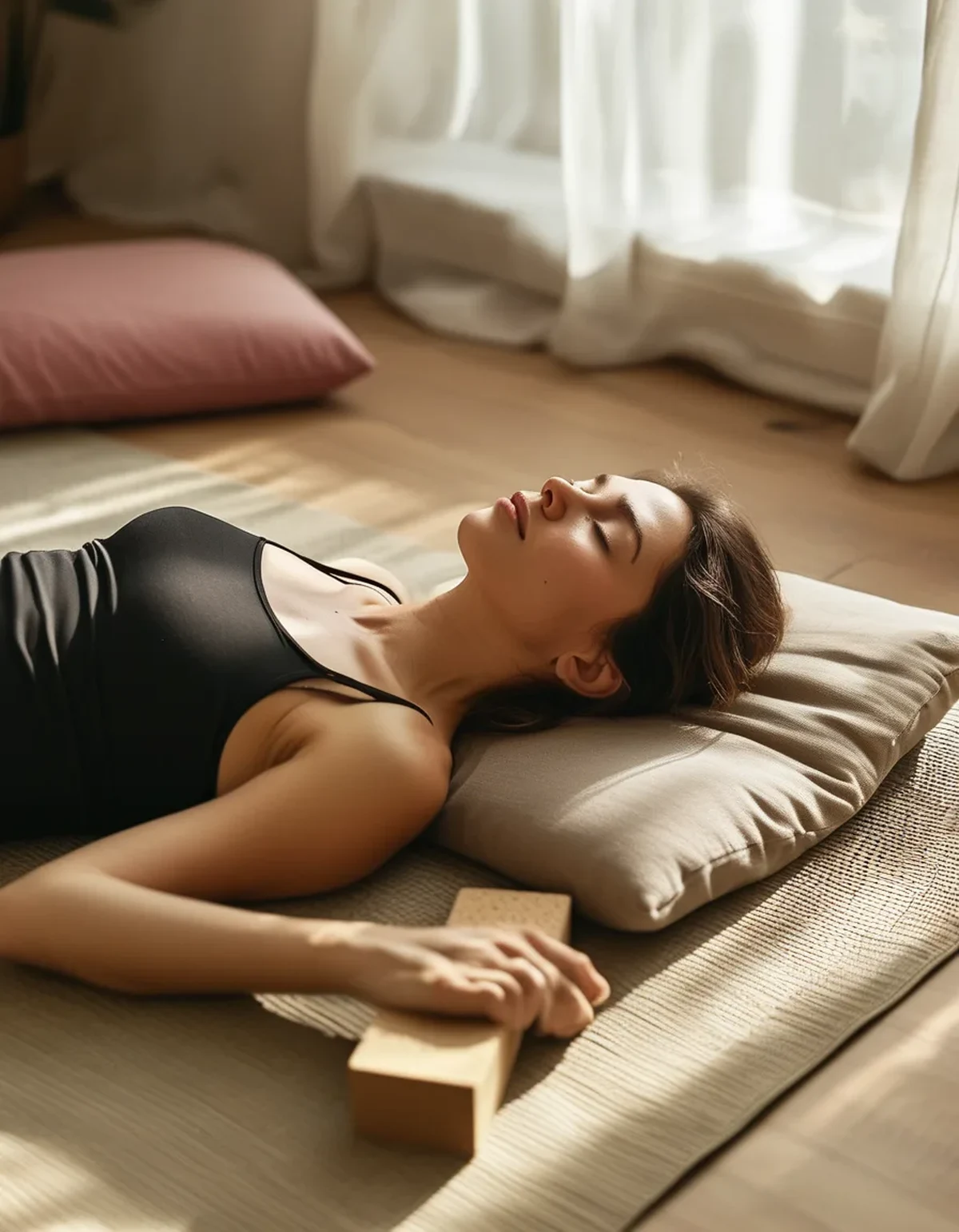
Supported fish, 4 minutes. A block or rolled blanket under the upper back with the head fully supported - this is the direct antidote to a day of rounding forward, and the head support is not optional.
Sphinx or seal, 3 to 5 minutes. Sphinx first, forearms down, shoulders away from the ears. Seal only if sphinx is genuinely comfortable. Keep the back of the neck long rather than crunched.
Supported side-lying twist, 4 minutes per side. A bolster or pillow under the top knee removes the strain that makes most people abandon twists early.
Finish with a neck release, 2 minutes per side. Sitting tall, ear towards shoulder, hand resting on the head with no pull at all. The weight of the hand is the entire load - adding pressure here is how people injure themselves.
Total: around 30 minutes. Cut the twist and one neck side for a 20 minute version that still does most of the work.
What Nobody Tells You About Neck Yin
Tingling is a stop signal, not a depth signal. Pins and needles into the arm or hand mean a nerve is being compressed or stretched, and the correct response is to come out immediately. This is different from the dull, tolerable ache of connective tissue loading.
Shorter holds are better here, not worse. 3 to 4 minutes at the neck is plenty, and pushing to 7 minutes because that is what the hip poses use is how people leave class feeling worse.
Props are load management, not a beginner concession. In shoulder yin, a bolster is what allows you to relax into a pose rather than bracing against it - and bracing defeats the entire purpose.
The jaw is part of the shoulder story. Most people clench without noticing, and consciously releasing the jaw and tongue changes what the neck can do within a single breath.
Coming out slowly matters more than in hips. Neck tissue does not appreciate a fast exit. Take a full breath to leave every pose above the shoulders.
And soreness the next day is not a badge here. Mild dullness is fine. Sharp pain, headache, or any arm symptom means the previous session was too much - reduce depth before reducing time.
How often should you practise this?
Three to four times a week beats one long weekend session. The tissue changes yin produces come from regular, moderate loading rather than from occasional intensity.
Evening is generally better than morning. Tissue is warmer and more compliant later in the day, and the parasympathetic effect suits winding down rather than starting up.
Fifteen minutes on a busy day is worth doing. Melting heart plus supported fish covers most of the desk-posture problem in a quarter of an hour.
Do not practise this immediately after upper body lifting. Give it a few hours at minimum, since long passive holds on freshly worked tissue are unnecessarily provocative.
Pair it with strengthening, not instead of it. Chronically rounded shoulders need the upper back strong as well as the front released - rows and face pulls do the other half.
And expect the change to be gradual. Meaningful improvement in how your shoulders sit at a desk takes four to six weeks, and it is much more noticeable in how the day feels than in how far you can reach.
FAQ: Yin for Shoulders and Neck, Answered
How long should you hold yin poses for shoulders?
3 to 5 minutes, which is shorter than the 5 to 7 minutes commonly used at the hips. The tissue is thinner and the nerves are closer to the surface.
Why do I get tingling in my arms during shoulder poses?
Because a nerve is being compressed or stretched. Come out of the pose - this is a stop signal, not a sign of depth, and it is different from the dull ache of connective tissue loading.
Can yin yoga fix tech neck?
It helps considerably with the tightness and the guarding, but posture also needs upper back strengthening and a better screen setup. Yin is one of three parts, not the whole answer.
How often should I do this sequence?
Three to four times a week, ideally in the evening when tissue is warmer. Fifteen minutes regularly beats an hour once a week.
Do I need props?
For shoulders and neck, effectively yes. Props are what let you relax instead of bracing, and bracing prevents the release you came for. A block and a firm pillow cover most of it.
Should I pull my head during neck stretches?
No. Rest the hand on the head and let its weight be the entire load. Pulling at the neck is how people turn a stretch into an injury.
Is next-day soreness normal?
Mild dullness is fine. Sharp pain, headache, or any symptom running into the arm means the session was too deep - reduce depth before you reduce hold time. This is general information, not medical advice.
TL;DR:
- Shoulders and neck need shorter holds than hips - 3 to 5 minutes, not 5 to 7 - because the tissue is thinner and the nerves are closer.
- The sequence: melting heart, thread the needle, supported fish, sphinx or seal, side-lying twist, gentle neck release. Around 30 minutes.
- Tingling into the arm is a stop signal, not a depth cue. Come out.
- Head support in supported fish is not optional, and the hand in a neck release supplies the whole load - never pull.
- Much of the tightness is guarding, not shortness. Release the jaw, slow the breath, let props take the weight.
- Three to four evening sessions a week beats one long one, and 15 minutes covers most of the desk problem.
- Pair it with rows and face pulls. Releasing the front without strengthening the back only half-works.
Sharp pain, headache, or arm symptoms mean back off. This is general information, not medical advice.
Keep Reading
This article is for general informational purposes only and is not medical advice. Always consult a qualified health professional for guidance specific to you.