Yin Yoga or Restorative? How to Choose Based on What You Actually Need
Quick Answer: Choose yin yoga when you want to target connective tissue and deepen flexibility through moderate, sustained stretch (3-5 minutes per pose with some sensation), and choose restorative yoga when your goal is pure nervous system rest with fully supported, sensation-free poses — the two overlap in pace but differ meaningfully in intent and intensity.
Both involve lying on the floor for long holds with props nearby, which makes them easy to confuse. The actual goal of each session is where they diverge.
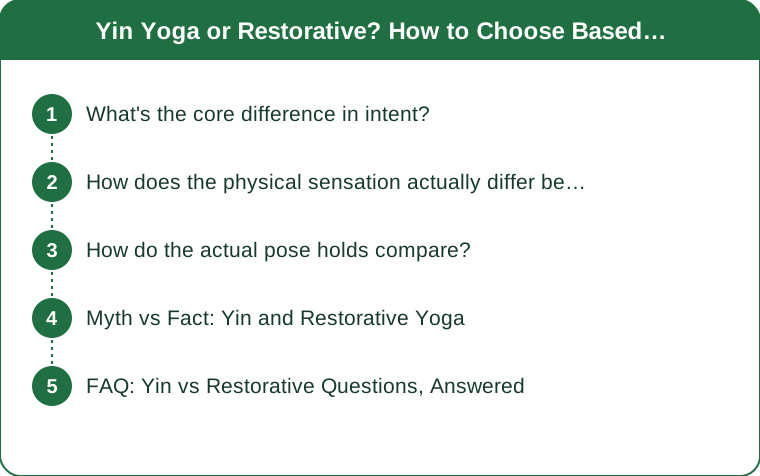
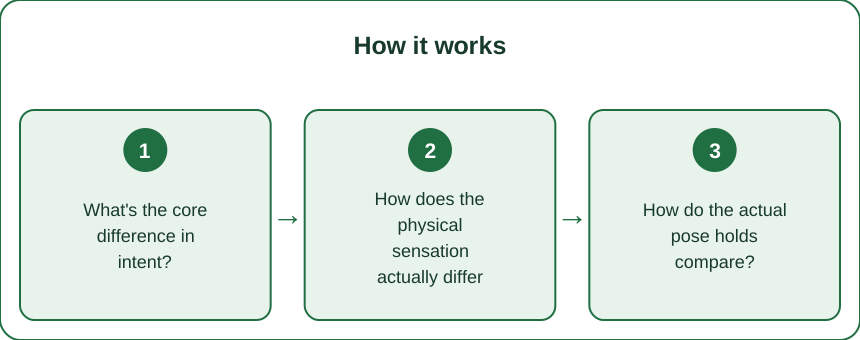
What’s the core difference in intent?
Yin targets connective tissue (fascia, ligaments) through mild-to-moderate sustained stretch, aiming to improve flexibility and joint mobility over time. Restorative targets the nervous system through fully supported, sensation-free rest, aiming purely for deep relaxation with no stretching goal at all.
How does the physical sensation actually differ between the two?
In yin, you’re meant to feel a mild-to-moderate stretch sensation — not pain, but genuine engagement with the tissue. In restorative, there should be zero stretch sensation — props fully support your body so muscles can completely release, more like an assisted nap than a stretch session.

How do the actual pose holds compare?
Yin holds typically run 3-5 minutes per pose, often into a stretch that builds gradually. Restorative holds run 5-20 minutes, fully supported, with the goal of your nervous system settling deeper the longer you stay — the time itself is part of the therapeutic effect, not incidental.
Myth vs Fact: Yin and Restorative Yoga
Myth: They’re basically the same practice with different names. Fact: They share pacing but differ meaningfully in physical intensity and physiological goal — one stretches tissue, the other calms the nervous system with no stretch involved.
Myth: Restorative is ‘easier’ or ‘less real’ than yin. Fact: Restorative isn’t lesser — it targets a different system entirely, and deep nervous system rest is a legitimate, evidence-supported goal on its own, not a lighter version of yin.
Myth: You should always feel something to know a class is ‘working.’ Fact: In restorative specifically, feeling nothing except comfort and rest IS the class working as intended.
FAQ: Yin vs Restorative Questions, Answered
Which one is better for stress relief specifically?
Both support stress relief, but restorative more directly targets the nervous system’s rest state, while yin’s benefit comes partly through the meditative quality of sustained stretch attention.
Can I do both in the same week, or should I pick one?
Many people benefit from both in rotation — yin on days you want a flexibility-focused practice, restorative on days you specifically need deep rest, like after a hard training week or high-stress period.
Which is better if I have an injury?
Restorative is generally the safer default with an active injury, since it involves no stretch sensation or tissue loading — check with a physical therapist or doctor for guidance specific to your injury before either practice.
TL;DR:
- Yin targets connective tissue through moderate sustained stretch; restorative targets pure nervous system rest
- Yin should feel like mild-to-moderate stretch; restorative should feel like zero stretch sensation
- Restorative isn’t a lesser version of yin — it’s a different physiological goal entirely
- Many people benefit from both in rotation depending on what a given week actually needs
Keep Reading
This article is for general informational purposes only and is not medical advice. Always consult a qualified health professional for guidance specific to you.