How Yin Yoga Actually Needs to Change During Pregnancy — Trimester by Trimester
Quick Answer: Yin yoga can generally continue through pregnancy with real modifications — avoiding deep passive stretching of already-loosening ligaments (relaxin makes overstretching easier and less protective), skipping prone (belly-down) and deep twisting poses, propping generously to avoid compressing the abdomen, and shortening hold times somewhat as pregnancy progresses — rather than either stopping entirely or continuing an unmodified pre-pregnancy practice.
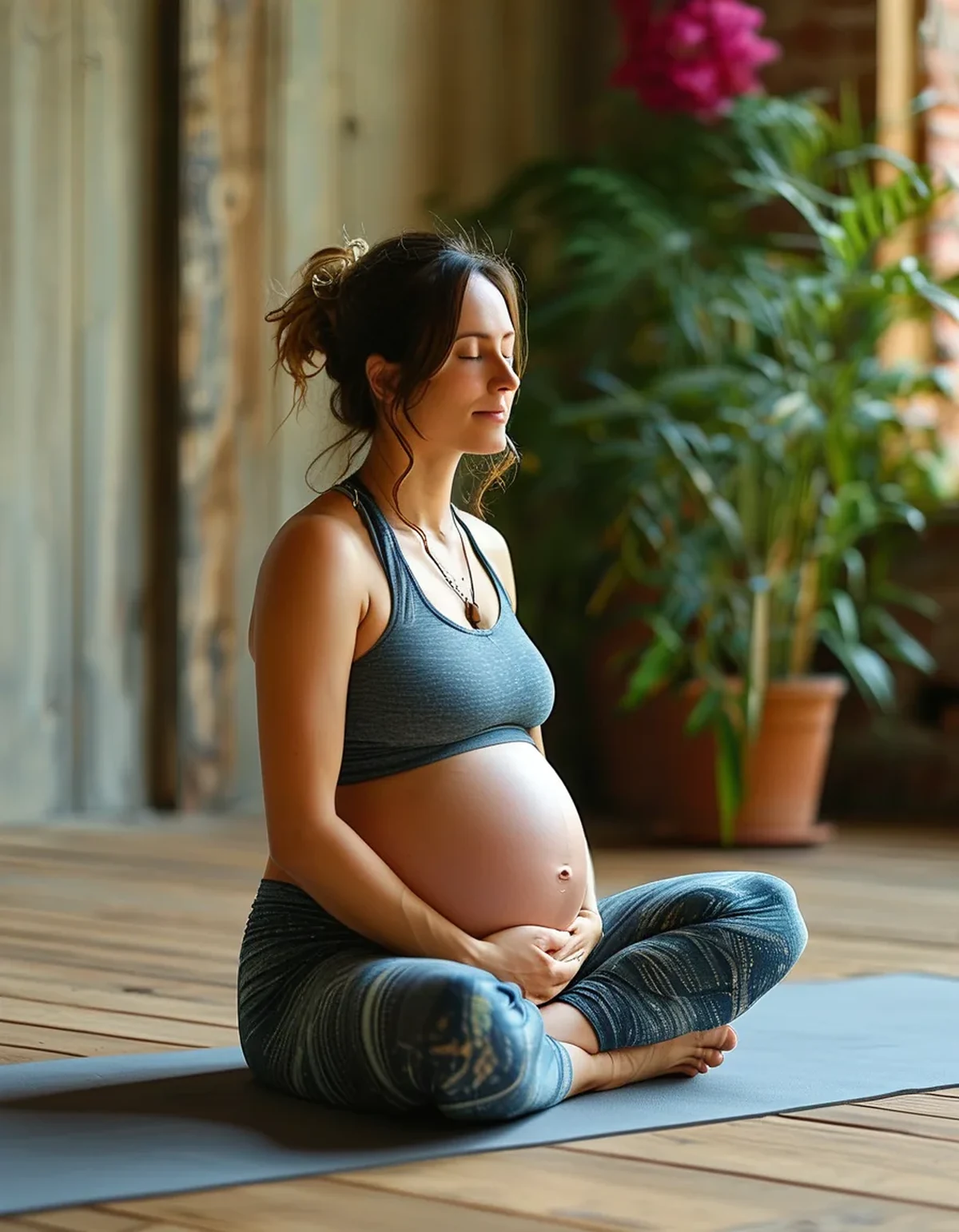
Because yin yoga is slow and gentle by nature, it’s easy to assume it needs no real changes during pregnancy. Several of its signature techniques — particularly deep, passive, long-held stretching — actually need meaningful adjustment as pregnancy progresses.
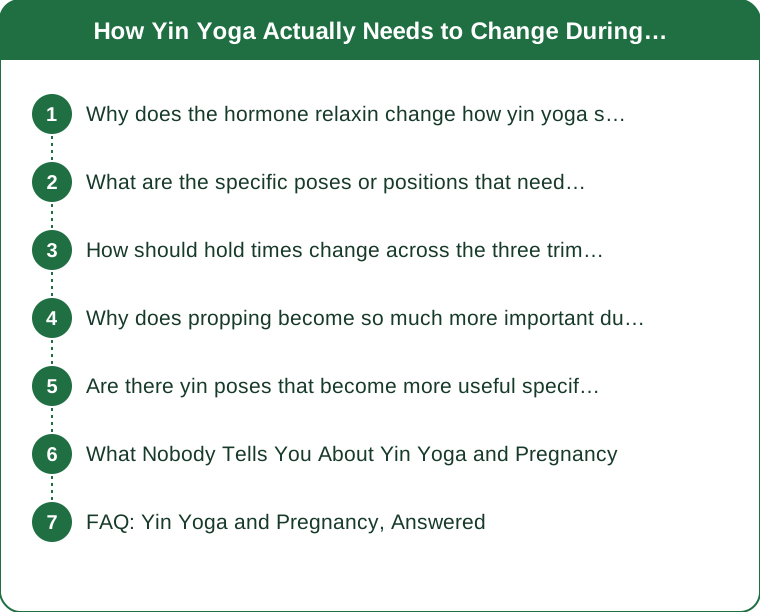
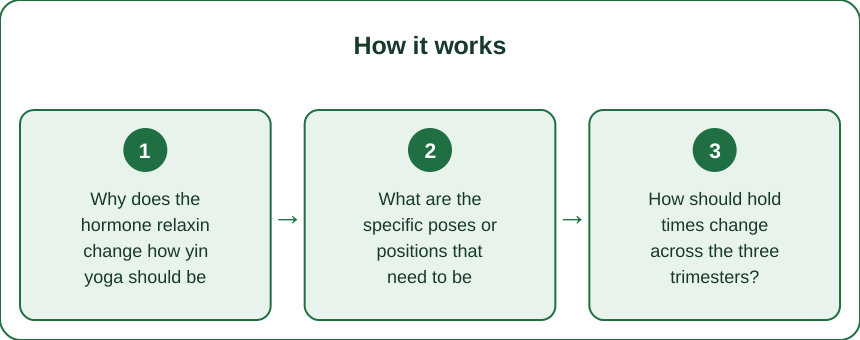
Why does the hormone relaxin change how yin yoga should be approached during pregnancy?
Relaxin loosens ligaments throughout the body in preparation for childbirth, which means joints have less natural resistance during a deep, passive stretch than they would outside pregnancy. Yin yoga’s whole method relies on passively stretching into a joint’s end range and holding, and with relaxin present, that end range moves further than the body’s protective mechanisms may account for — making overstretching a real risk that a pre-pregnancy yin practice didn’t carry to the same degree.
What are the specific poses or positions that need to be avoided or heavily modified?
Any prone (belly-down) pose is out entirely once the belly starts showing meaningfully, along with deep twists that compress the abdomen and very deep forward folds that also put pressure there. Deep hip-opening poses like Saddle or Butterfly can generally continue but with reduced depth — supported by more props and held with noticeably less intensity than a pre-pregnancy version of the same pose.
How should hold times change across the three trimesters?
First trimester hold times can often stay close to a regular practice, adjusted mainly for fatigue and any early symptoms. Second trimester, holds are often shortened slightly and depth reduced as the belly grows and balance shifts. Third trimester, shorter holds (2-3 minutes rather than 4-5), significantly more props, and a focus on comfort and gentle release over depth are generally the right approach — the goal shifts from deep tissue work toward simply supported, comfortable stillness.
Why does propping become so much more important during pregnancy yin practice?
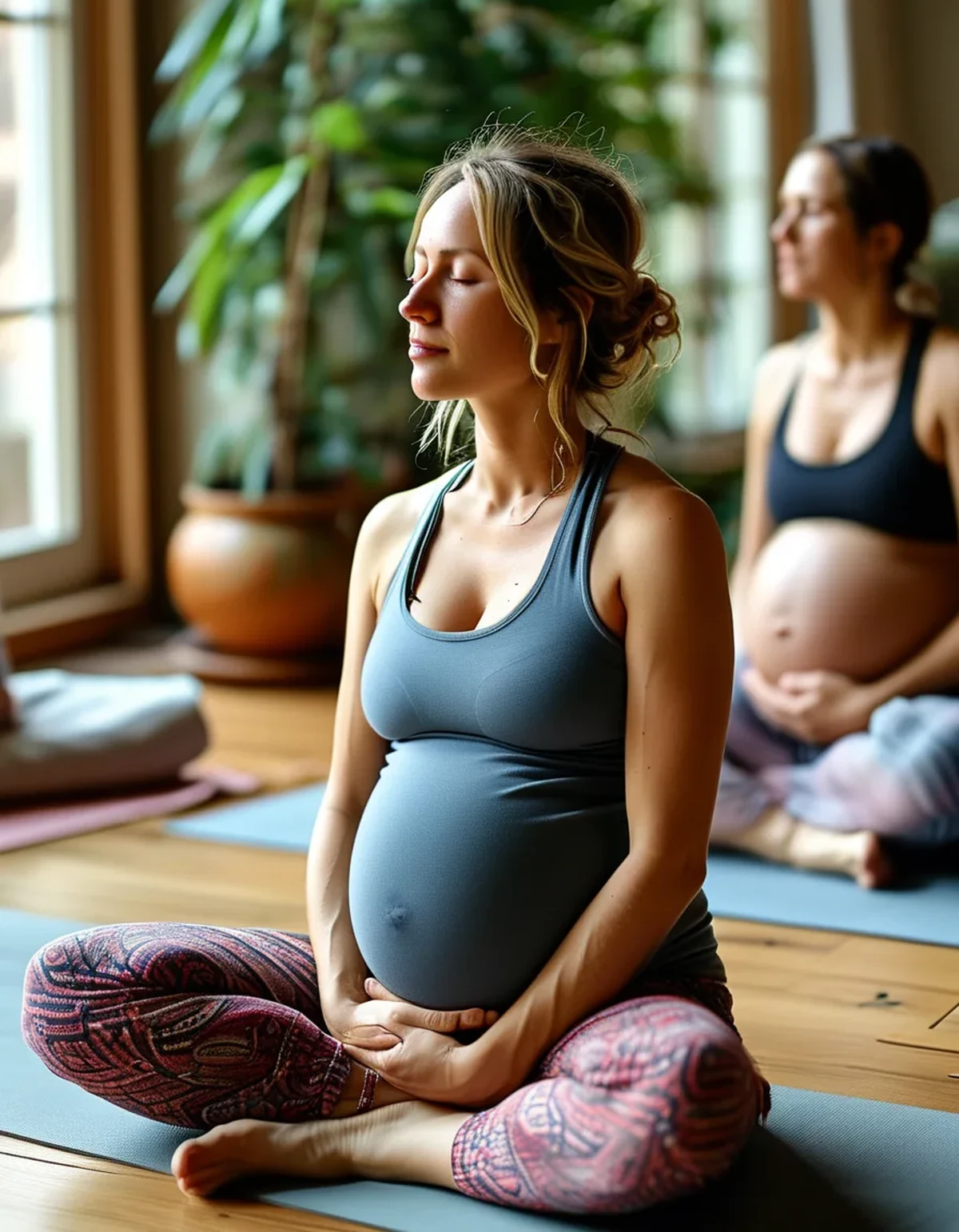
Props — bolsters, blocks, blankets — let you support the body’s weight and reduce how deep a stretch goes without abandoning the pose entirely, which is exactly what’s needed when ligament laxity makes going as deep as before genuinely risky. Generous propping under the hips, belly, and knees in seated or reclined poses also improves comfort significantly as balance and center of gravity shift throughout pregnancy.
Are there yin poses that become more useful specifically during pregnancy?
Supported reclined poses, gentle seated forward folds with a bolster under the torso, and side-lying supported positions tend to work particularly well, since they support the growing belly rather than compress or strain it. Many of these also double as genuinely restful positions, which matters as pregnancy fatigue increases, especially in the third trimester.
What Nobody Tells You About Yin Yoga and Pregnancy
The instinct to “just go gentler” with yin during pregnancy is right in spirit but often insufficient in practice — because yin’s core mechanism is deep passive stretching held over minutes, a pregnancy-safe version genuinely requires specific pose eliminations and prop changes, not just a vaguely softer version of the exact same sequence, which is a distinction many general prenatal fitness guides skip over.
FAQ: Yin Yoga and Pregnancy, Answered
Should I switch to a prenatal-specific yin class instead of a regular one?
If available, yes — a prenatal-specific class will already have these modifications built in, removing the guesswork of adapting a regular sequence yourself.
Is it safe to start yin yoga for the first time during pregnancy?
Generally yes with appropriate modifications and a doctor’s clearance, though starting a new practice during pregnancy is a good moment to work with an instructor familiar with prenatal adaptations rather than following a general class alone.
Does yin yoga help with pregnancy-related hip and lower back discomfort?
Often yes — gentle, well-propped hip-opening and supported reclined poses are commonly used specifically to ease the hip and lower back tension that builds as pregnancy progresses.
This is general information, not medical advice — check with your doctor before continuing or starting any yoga practice during pregnancy.
TL;DR:
- Relaxin loosens ligaments during pregnancy, making yin’s deep passive stretching genuinely riskier than usual
- Prone poses, deep twists, and very deep forward folds should be avoided once the belly is showing
- Hold times and depth should both reduce progressively across the three trimesters
- Generous propping becomes essential, not optional, for both safety and comfort
Yin yoga doesn’t have to stop during pregnancy — it just needs real, specific modifications rather than a vaguely gentler version of the same routine.
See It in Motion
Seen here: Maternity Capris with Side Pockets — shop it on bubblelime.com
Keep Reading
This article is for general informational purposes only and is not medical advice. Always consult a qualified health professional for guidance specific to you.