Yin Yoga for Tight Hips: The Deep, Slow Practice That Actually Opens Them
Quick Answer: Tight hips don’t budge from quick, dynamic stretching because that only reaches your muscles — yin yoga opens them by holding passive shapes for 3-5 minutes, which is long enough to reach the deep connective tissue underneath. Poses like butterfly, dragon, pigeon, frog, and shoelace, held without forcing and practiced consistently, are what actually change your range of motion over weeks, not seconds.
You’ve done the same 30-second hip stretch before every workout for months, and your hips still feel like they’re wrapped in packing tape. That’s not a you problem — it’s a tool problem. Quick stretches are built for warming up, not for changing tissue that’s been tight for years. Yin yoga is built for exactly that job.
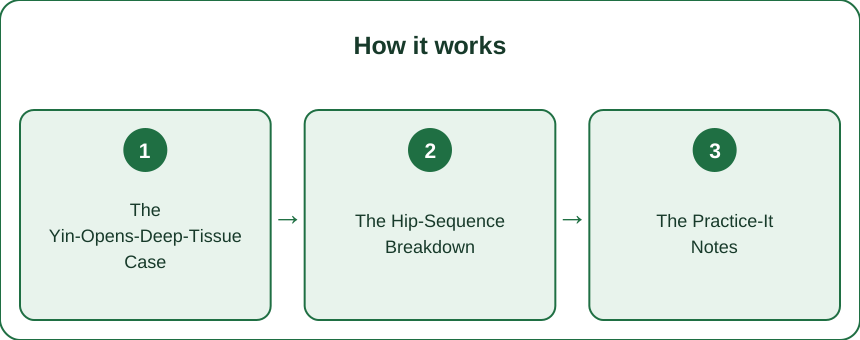
Why does yin yoga open tight hips when other stretching doesn’t?
The short version: yin yoga holds poses for a long time, and long holds are what reach deep connective tissue. A dynamic stretch or a quick 20-second hold mostly works your muscles. Fascia — the deep connective tissue wrapped around your muscles and joints — responds much more slowly, and it needs sustained, passive pressure to actually release.
Your hips are one of the biggest storage sites for tension in the body. Between sitting most of the day and skipping mobility work, it’s no wonder they feel locked up. Yin yoga’s long, passive holds are what let that tension unwind gradually, session after session — not instantly, but reliably.
Think of it like this: a quick stretch knocks on the door. A 4-minute yin hold sits down and waits for someone to answer.
What’s the best yin yoga sequence for tight hips?
You don’t need a complicated routine — five poses cover most of what makes hips feel stuck:
- Butterfly — opens the inner hips, soles of the feet together, knees relaxed out to the sides.
- Dragon (a deep lunge) — targets the hip flexors, the muscles that get shortest from sitting.
- Pigeon, also called sleeping swan — works the outer hips and glutes.
- Frog — opens the inner thighs and hips together, a deeper cousin of butterfly.
- Square, or shoelace — a seated hip stretch that hits the outer hip and glute from a different angle.
Run through even two or three of these in a session and you’ve covered the inner hips, outer hips, and hip flexors — the three areas that tend to lock up hardest.
How long should you hold each pose, and how do you practice safely?
Hold each shape for 3-5 minutes. That sounds long when you first sit down, and honestly, it is — the first 60 seconds are the hardest part of any yin pose. Stay anyway. That’s where the real work happens.
A few practice notes that matter more than people expect:
- Don’t force it. Find your edge — a sensation that’s noticeable but not painful — and stop there. Yin is about sinking in, not muscling through.
- Breathe and soften. Every exhale is a chance to relax a little deeper into the shape, not push a little harder.
- Use props. A block under your knee in dragon, a bolster under your chest in butterfly — props let you hold the pose longer and more comfortably, which is the whole point.
- Be consistent. A weekly practice beats one heroic 90-minute session that leaves you sore and reluctant to come back.
- Try it in the evening. Yin’s slow pace makes it a natural way to wind down before bed, on top of the hip benefits.
If you have a hip or joint condition, or a stretch produces sharp or shooting pain rather than a dull, tolerable stretch sensation, ease off and check in with a physical therapist or doctor before continuing — yin should feel intense at times, never injurious.
Mistakes everyone makes with yin yoga for hips
“Mistakes Everyone Makes”
- Forcing the stretch instead of relaxing into it. Yin rewards patience, not effort — gripping and straining actually works against the release you’re after.
- Bailing out before the 3-minute mark. Fascia needs time to respond. Leaving a pose at 45 seconds means you never got past the “muscle stretch” phase into the deep-tissue phase.
- Skipping the props out of pride. Using a block isn’t cheating — it’s what lets you actually relax instead of shaking through the hold.
- Treating yin like restorative yoga. They get lumped together, but they’re not the same practice — restorative is about pure comfort with zero stretch sensation, while yin deliberately finds an edge to work the tissue. Confuse the two and you’ll either overdo it in restorative or underdo it in yin.
- Practicing once and expecting results. The fifth mistake is the one that trips up even people who’ve done yoga for years — and it’s not what you’d guess.
Mini FAQ
How long should you hold yin yoga poses for tight hips?
Aim for 3-5 minutes per pose. That’s the range where you move past the surface muscle stretch and start reaching the deeper connective tissue that’s actually keeping your hips tight.
What are the best yin yoga poses for hip opening?
Butterfly, dragon, pigeon (sleeping swan), frog, and shoelace cover the inner hips, outer hips, and hip flexors between them. Two or three of these in a single session is plenty.
Is yin yoga the same as restorative yoga?
No — they’re related but different practices. Yin works toward a gentle edge to stress the connective tissue, while restorative is about full, effortless relaxation with no stretch sensation at all.
TL;DR
- Yin yoga opens tight hips through long, passive holds (3-5 minutes) that reach deep connective tissue, not just muscle.
- The core sequence: butterfly, dragon, pigeon, frog, and shoelace.
- Relax into your edge instead of forcing it, breathe and soften, and use props to hold poses longer and more comfortably.
- Consistency beats intensity — a regular practice, even short, outperforms one long occasional session.
- Yin isn’t restorative yoga; it deliberately finds an edge rather than avoiding sensation entirely.
- Stop and check with a professional if you feel sharp pain instead of a tolerable stretch.
Keep Reading
This article is for general informational purposes only and is not medical advice. Always consult a qualified health professional for guidance specific to you.