Should You Do Yin Yoga After Lifting? The Same-Day Question
Quick Answer: Long passive stretching immediately after heavy lifting can temporarily reduce force production and may interfere with recovery when done right after the session. Waiting a few hours, or scheduling yin on non-lifting days, gets you the mobility and nervous-system benefits without the tradeoff. A short 10-minute yin sequence is fine anytime.
It feels intuitive: you just lifted, everything’s tight, so 45 minutes of long-hold stretching should be exactly what you need. The reality is more nuanced, and the timing matters more than the practice.

What does long passive stretching do right after lifting?
Two effects are worth knowing about.
Acute force reduction. Prolonged static stretching - holds beyond about 60 seconds - produces a temporary reduction in maximal force output that can last from 30 minutes to a couple of hours. Yin holds run 3 to 5 minutes, well past that threshold. If you’re lifting again shortly after, this matters. If you’re done for the day, it mostly doesn’t.
Tissue state. After heavy resistance work, muscle tissue has microscopic damage and an active inflammatory repair response underway. There’s a reasonable theoretical concern that aggressive passive lengthening on top of that adds mechanical stress at an inopportune moment, though the evidence here is limited and mostly indirect.
What’s better established is the nervous system side, and it points the other direction: long passive holds with slow breathing shift you toward parasympathetic activity, which is genuinely useful for winding down after a stimulating training session. That benefit is real and is why the pairing feels so good.
So should I separate them or not?
Practical guidance, in order of how much it matters:
If you’re lifting again within a few hours - a two-a-day, or an evening session after morning lifting - separate them. The acute force reduction is real and you’ll feel it.
If lifting was your last training of the day - which describes most people - a full yin session afterward is unlikely to hurt anything meaningful. Wait 30-60 minutes if you can, mostly so your heart rate and body temperature settle enough that long holds feel restful rather than restless.
If you’re in a strength-focused block chasing measurable progress - separating them is worth the scheduling effort. Put yin on rest days or the morning after a lifting day.
If mobility is your primary goal - do yin on non-lifting days entirely, when your tissues are fresh and you can hold positions with better quality. Yin done in a fatigued state tends to be less productive because you’re less able to relax into the shape.
A short session is a different animal. Ten minutes of two or three gentle poses as a wind-down is a legitimately good post-lift practice for almost anyone. The concerns above scale with duration.
What does a good post-lift yin sequence look like?
If you’re doing it right after lifting, adjust the practice rather than skipping it.
Shorten the holds. 90 seconds to 2 minutes rather than 4 to 5. You get most of the nervous system benefit and less of the acute force cost.
Pick poses that don’t target what you just trained. After a heavy leg day, do reclined twists, supported fish, and butterfly rather than deep dragon and saddle poses that load already-fatigued hip flexors and quads. After an upper body day, hips and hamstrings are fine.
Use more props than usual. Post-training tissue benefits from support. Bolsters and blocks let you find the shape without your muscles working to hold you there, which is the whole point of yin anyway.
Skip the intensity chase. Yin depth after lifting should feel like 40-50% of your maximum sensation, not 70%. Your proprioception is less reliable when fatigued, which makes it easier to overshoot without noticing.
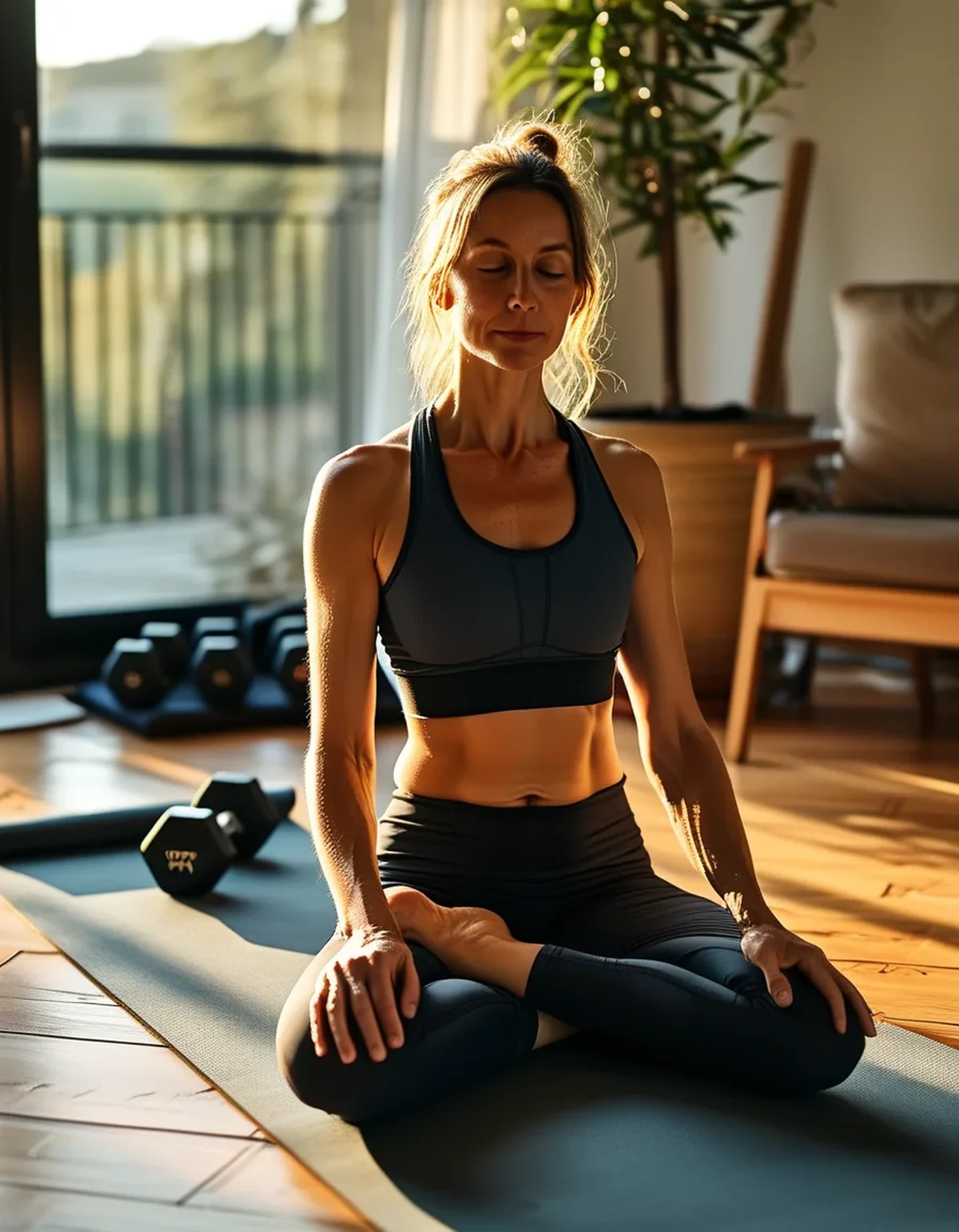
A workable 12-minute sequence: supported butterfly (2 min), reclined twist (2 min each side), supported fish (2 min), legs up the wall (4 min). Nothing aggressive, all restorative, no interference with anything.
5 Mistakes Everyone Makes Pairing Yin With Lifting
1. Going deeper because you feel ‘looser’ post-workout. Warm tissue tolerates more range, which feels like progress and is actually where post-workout overstretching happens. Increased warmth isn’t increased structural capacity.
2. Doing yin instead of a cool-down. They’re not the same. A few minutes of easy movement to bring your heart rate down still belongs before you lie on the floor for 40 minutes.
3. Using yin to treat soreness. Long passive holds don’t meaningfully reduce delayed onset muscle soreness. Light movement and time do more. Yin feels nice while you’re in it, which people mistake for a treatment effect.
4. Scheduling a hard yin practice the night before a heavy session. The acute force reduction can persist for a couple of hours, and if a long yin practice leaves you feeling loose and unstable, that’s not what you want at 6am under a barbell. Morning-after is better than night-before.
5. Treating all stretching as interchangeable. Dynamic mobility work before lifting, brief static after, and long-hold yin on separate days is a cleaner structure than lumping them together and hoping.
FAQ: Yin and Strength Training Questions, Answered
Does yin reduce my strength gains long term?
No evidence suggests that when the two are separated in time. The concerns are about acute effects in the same session, not chronic adaptation. Regular yin practice alongside lifting is a well-established combination.
What about yin before lifting?
Generally not ideal - long passive holds before strength work reduce force output and reduce joint stiffness in ways that aren’t helpful under load. Dynamic mobility work before lifting, yin afterward or on other days.
Is yin better than foam rolling after a session?
Different tools. Foam rolling has short-term effects on perceived tightness with minimal force reduction, which makes it the better immediate post-lift option. Yin is the better nervous-system and long-term mobility option. As evenings cool off into fall, a warm room matters more for yin than it did in July - cold tissue makes long holds genuinely less comfortable.
TL;DR:
- Long passive holds cause a temporary reduction in force output lasting up to a couple of hours
- If lifting is your last session of the day, a full yin practice afterward is fine - wait 30-60 minutes if you can
- In a strength-focused block, put yin on rest days or the morning after
- Post-lift yin should be shorter, better propped, and target areas you didn’t just train
- Warmth after training increases range without increasing capacity - don’t chase depth
The two practices work well together. They just work better an hour or a day apart.
Keep Reading
This article is for general informational purposes only and is not medical advice. Always consult a qualified health professional for guidance specific to you.